Tackling Hair Loss: Your Guide to Online Prescriptions
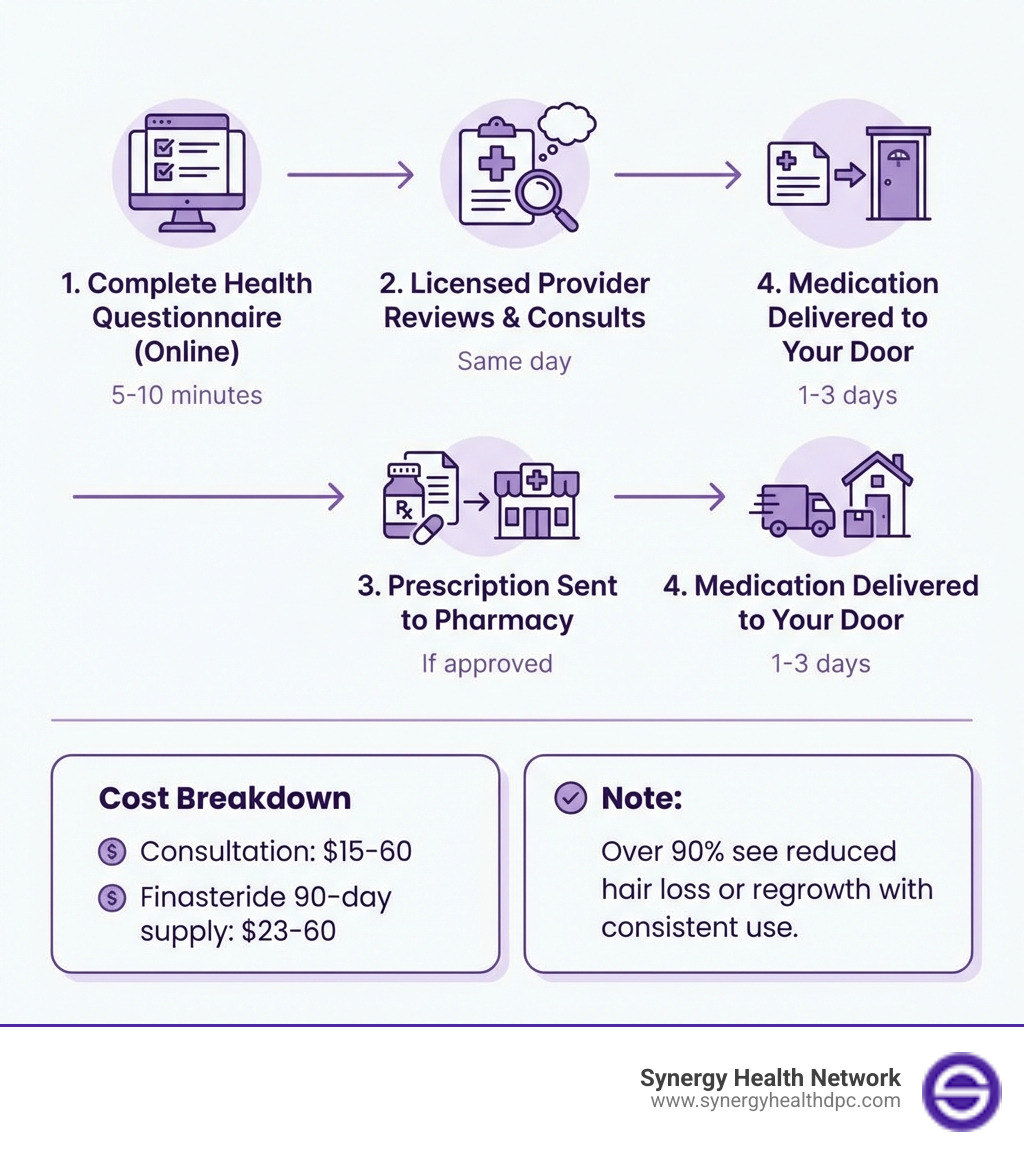
Finasteride online prescription services have made treating male pattern baldness simpler than ever. Here’s how to get started:
Quick Steps to Get Your Prescription:
- Choose a telehealth platform that offers hair loss consultations
- Complete a medical questionnaire about your health history and symptoms
- Consult with a licensed provider via video or online form (typically $15-60)
- Receive your prescription if approved by the provider
- Get medication from your pharmacy or opt for home delivery
Cost Overview:
- Online consultation: $15-60
- Generic Finasteride 1mg (90 tablets): $23-60
- Same-day or next-day delivery often available
Hair loss affects up to half of men by age 50, and for many, it chips away at confidence and self-image. Male pattern baldness isn’t just about genetics—it’s about a hormone called DHT that weakens your hair follicles over time.
The good news? You don’t need to schedule an in-person doctor visit, take time off work, or pay surprise fees to get treatment. Prescription finasteride has been clinically proven to reduce hair loss or increase regrowth in over 90% of participants who use it consistently.
Online prescription services connect you with licensed medical providers who can evaluate your situation and prescribe FDA-approved medications like finasteride and oral minoxidil. The entire process happens from your phone or computer, and your medication arrives at your door or local pharmacy—often within 1-3 days.
This guide walks you through exactly how to get a finasteride prescription online, what to expect during your consultation, and how these medications actually work to combat hair loss.
What Are Finasteride and Oral Minoxidil?
When we talk about effective treatments for male pattern hair loss, two names consistently rise to the top: Finasteride and Minoxidil. Both are FDA-approved medications, but they tackle hair loss from different angles, offering a powerful one-two punch against thinning hair.
Finasteride is an oral prescription medication primarily used to treat male pattern hair loss, also known as androgenetic alopecia. It’s often prescribed as a 1mg daily dose. Finasteride belongs to a class of drugs called 5-alpha reductase inhibitors. This means it works by targeting a specific enzyme in your body.
Oral Minoxidil, while more widely known in its topical form (like Rogaine), is also available as an oral prescription medication for hair loss. Historically, Minoxidil was used to treat high blood pressure, and hair growth was a happy side effect! It’s classified as a vasodilator, meaning it helps to widen blood vessels.
These medications are backed by scientific research, demonstrating their efficacy in combating hair loss. For a deeper dive into how Finasteride should be properly used, you can refer to scientific research on Finasteride’s proper use.
How They Work to Combat Hair Loss
Understanding the mechanism of action for Finasteride and Minoxidil helps us appreciate why they’re so effective.
Finasteride targets the root cause of male pattern baldness: dihydrotestosterone (DHT). In men genetically predisposed to hair loss, testosterone is converted into DHT by an enzyme called 5-alpha reductase. This DHT then binds to receptors in hair follicles, causing them to shrink and weaken over time—a process called follicular miniaturization. Our hair growth cycle shortens, and hairs become finer, shorter, and eventually stop growing altogether. Finasteride works by blocking the 5-alpha reductase enzyme, significantly reducing DHT levels in the scalp. This action helps to prevent further hair loss and can even promote the regrowth of hair by allowing follicles to normalize and enter a healthy anagen (growth) phase.
Oral Minoxidil, on the other hand, works differently. While its exact mechanism in hair growth isn’t fully understood, it’s believed to improve blood flow to the hair follicles by dilating blood vessels. This increased blood supply delivers more oxygen, nutrients, and growth factors to the follicles, which can stimulate them to enter and prolong the anagen phase. It can also cause dormant follicles to reactivate, leading to thicker, stronger hair. Think of it like giving your hair follicles a super-charged nutrient boost!
Together, these medications offer a comprehensive approach: Finasteride reduces the hormone that attacks your hair, while Minoxidil helps to revitalize and strengthen the follicles themselves.
Generic vs. Brand-Name Medications
When exploring hair loss treatments, you’ll inevitably encounter both brand-name and generic options. Let’s clarify the difference, especially regarding Finasteride online prescription services.
Finasteride is the generic name for the drug. The original brand-name version for hair loss is Propecia, manufactured by Merck and Co. Similarly, Minoxidil is the generic name, with Rogaine being its most famous brand-name topical counterpart. For oral minoxidil, while there isn’t a widely recognized brand name specifically for hair loss, it’s often referred to simply as oral minoxidil.
The key difference? Cost. Brand-name medications like Propecia are typically significantly more expensive than their generic equivalents. Why? Because the pharmaceutical company that developed the drug holds a patent for a period, allowing them to be the sole seller and set higher prices. Once the patent expires, other manufacturers can produce generic versions.
Generic medications contain the exact same active ingredients, dosage, and strength as their brand-name counterparts. The FDA requires generic drugs to be bioequivalent, meaning they work the same way and provide the same clinical benefit. So, choosing generic Finasteride 1mg gives you the same effective treatment as Propecia, but at a fraction of the cost. For example, a 90-day supply of generic finasteride can cost as little as $23-60, making long-term treatment much more accessible and affordable.
How to Get Your Finasteride Online Prescription
Gone are the days when you had to make an appointment, drive to a clinic, and sit in a waiting room just to discuss hair loss. Thanks to telemedicine platforms, getting a Finasteride online prescription or an oral Minoxidil prescription is now incredibly convenient and discreet.

Our direct primary care model at Synergy Health DPC is designed to make this process as seamless as possible. We offer unlimited virtual visits and 24/7 provider access, all for a single monthly fee with no copays. This means you can get personalized treatment from the comfort of your home, without worrying about hidden costs.
The process typically involves a virtual consultation, where you’ll connect with a licensed medical provider. If approved, your digital prescription is then sent directly to your preferred pharmacy, or you can opt for convenient home delivery. The cost of the online consultation can range from $15 to $60, and as we discussed, generic medication costs are quite affordable.
Step-by-Step: Getting a Finasteride Online Prescription
Ready to take the plunge? Here’s how we guide you through obtaining your online prescription:
- Choose a telehealth service: Start by selecting a reputable online platform that specializes in hair loss treatments, like our services at Synergy Health DPC. We connect you with licensed medical professionals who understand the nuances of male pattern baldness.
- Complete a medical questionnaire: This is your initial health check-in. You’ll fill out a comprehensive online questionnaire detailing your medical history, current health conditions, medications you’re taking, and specific hair loss concerns. This helps our providers understand your overall health picture and determine if Finasteride or Minoxidil is appropriate and safe for you. Be thorough and honest—it’s crucial for your safety!
- Consult with a licensed provider: Once your questionnaire is submitted, a licensed medical provider will review your information. Depending on the service and your specific case, this might involve a quick online chat, a phone call, or a video consultation. This is your opportunity to discuss your symptoms, ask questions, and get personalized advice. Our providers are here to ensure you receive the best care custom to your needs.
- Receive your prescription: If our provider determines that Finasteride or oral Minoxidil is a safe and suitable treatment for you, they will issue a digital prescription. This prescription is just like one you’d get from an in-person doctor, but it’s sent electronically.
- Get medication from your pharmacy: You have options! You can choose to have the prescription sent to your local pharmacy for convenient pickup, or many online services (and some pharmacies) offer discreet home delivery. With our model, we aim for quick turnaround times, often getting your medication to you within 1-3 business days. Some services even offer same-day delivery if Finasteride is prescribed.
What to Expect During Your Consultation
Your online consultation is a crucial step in getting your Finasteride online prescription. It’s designed to be thorough yet efficient, ensuring you receive safe and effective care.
During your virtual visit, our licensed medical provider will:
- Review your medical history: They’ll go over the information you provided in your questionnaire, looking for any pre-existing conditions, allergies, or medications that might interact with Finasteride or Minoxidil.
- Discuss your symptoms: Be prepared to talk about your hair loss pattern, how long it’s been happening, and any other related symptoms. Photos can be helpful here to illustrate the extent of your hair loss.
- Conduct a hair loss assessment: The provider will evaluate the information to confirm if you have male pattern baldness and if these medications are likely to be effective for your specific case. They’ll also consider if there are any other underlying causes for your hair loss that might need different attention.
- Answer your questions: This is your chance to voice any concerns you have about side effects, how long it takes to see results, or how the medication might fit into your lifestyle. We encourage you to ask away!
- Develop a personalized treatment plan: If Finasteride or oral Minoxidil is deemed appropriate, the provider will outline a treatment plan, including dosage and expectations. They will also discuss potential side effects and necessary precautions. Our direct primary care model means you get personalized attention and ongoing support, allowing for adjustments to your treatment plan as needed.
Our goal is to make sure you feel informed, comfortable, and confident in your treatment journey.
Finasteride & Minoxidil: Efficacy, Safety, and What to Expect
Starting on a hair loss treatment journey can feel like a big step, but with medications like Finasteride and Minoxidil, you’re choosing options backed by strong clinical evidence.
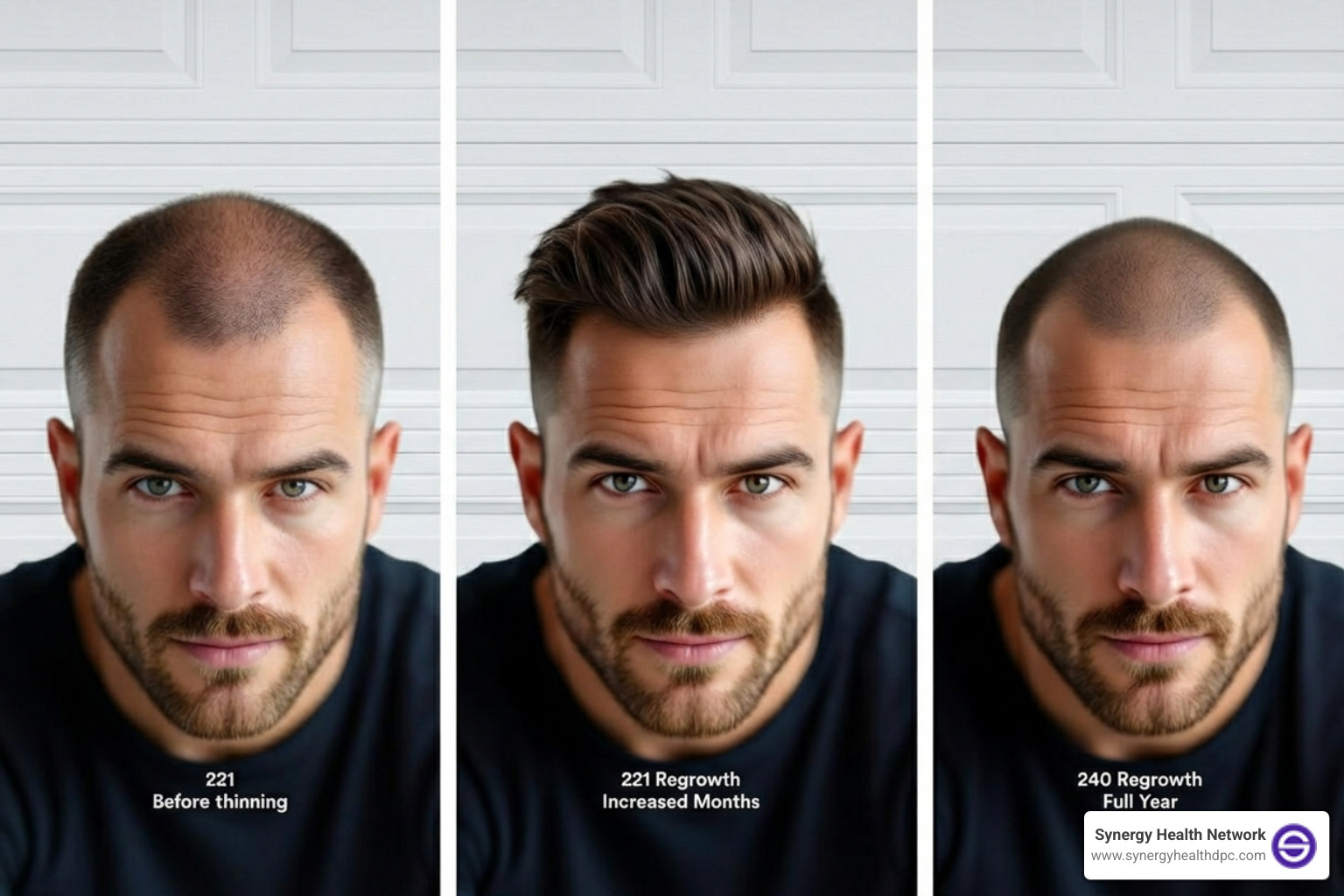
Let’s look at the numbers. Finasteride 1mg is a true hero in the fight against hair loss. Clinical trials show that:
- 83% of men taking Finasteride saw no further hair loss after 2 years. Imagine putting a stop to the shedding!
- It can reverse hair loss in 2/3 of patients and stop hair loss in most others.
- Over 90% of users saw increased regrowth or reduced hair loss in clinical trials.
- It has been clinically proven to help regrow hair in 3-6 months.
These are impressive statistics, offering real hope for those experiencing male pattern baldness. However, like any medication, understanding the recommended dosages, timeline for results, and potential side effects is crucial. For the most comprehensive information, always refer to the official FDA drug label for Finasteride.
Recommended Dosages and Timeline for Results
Patience, my friend, is a virtue, especially when it comes to hair growth. These medications aren’t magic wands, but they are incredibly effective with consistent use.
For Finasteride, the standard recommended dosage for hair loss is 1mg taken orally once daily. It’s important to take it every day, preferably at the same time, with or without food.
For oral Minoxidil, dosages can vary and will be determined by your prescribing provider based on your individual needs and health.
Consistency is key! Skipping doses or stopping treatment prematurely will undo your progress. If you forget a dose, simply take your next tablet as usual; do not double up. Finasteride won’t work faster or better if you take it more than once a day.
Here’s a typical timeline for what to expect:
- 3-6 months: You might start noticing initial results. This could be a reduction in hair shedding, or perhaps some fine, new hair growth. Finasteride 1mg can reduce hair loss within 3 months of use.
- 6-12 months: More significant changes usually become apparent. Hair may appear thicker, and areas of thinning might start to fill in. It can take up to 12 months to see the full effect of Finasteride.
- Beyond 12 months: Continued use is essential to maintain the benefits. If you stop taking Finasteride, any hair gained will likely be lost, and hair loss will resume within 6 to 12 months. This is why it’s considered a long-term commitment.
Potential Side Effects and Important Precautions
While Finasteride and Minoxidil are generally safe and well-tolerated, be aware of potential side effects and necessary precautions. Our providers will discuss these with you during your consultation.
Finasteride Side Effects:
- Sexual Side Effects: These are the most commonly discussed side effects. In clinical trials of Finasteride 1mg, sexual side effects were reported in 1.2-1.8% of patients taking Finasteride versus 0.7-1.3% taking a placebo. These can include:
- Decreased libido (lower sex drive)
- Erectile dysfunction (ED)
- Ejaculatory disorder (problems with ejaculation)
- Decreased volume of ejaculate
For most people, these side effects resolve after stopping the medication. However, a minority of individuals may experience persistent sexual dysfunction for an average of 40 months after stopping the pills.
- Depression Risk: Emerging evidence suggests that new or worsening depressive symptoms, and even thoughts of suicide, have been reported in users, particularly those younger than 45. If you experience any changes in mood or mental health, you should stop Finasteride use and contact your healthcare provider or a mental health therapist immediately.
- Breast Changes: Fewer than 1% of patients may develop breast tenderness or enlargement. In very rare cases, male breast cancer has been reported. Any changes to breast tissue or nipple discharge should be reported to a doctor immediately.
- PSA Level Effects: Finasteride can affect Prostate Specific Antigen (PSA) test results, which are used for prostate cancer screening. It decreases PSA levels. It is crucial to inform your healthcare provider that you are taking Finasteride so they can interpret your PSA results accurately. While there have been reports of a slight increased risk of high-grade prostate cancer for men over age 55 taking a higher dosage (5mg) of Finasteride, studies on the 1mg dose for hair loss show no increase in deaths, and some even suggest fewer deaths.
- Other Less Common Effects: These can include allergic reactions (rash, itching, hives, swelling of the face/lips/tongue/throat), and testicular pain.
Important Precautions:
- Not for Women or Children: Finasteride is strictly for men. It should not be used by women or children.
- Pregnancy Risk: Women who are pregnant or may become pregnant should absolutely avoid contact with broken or crushed Finasteride tablets. The active ingredient can be absorbed through the skin and may cause birth defects in a male fetus. If contact occurs, wash the area immediately with soap and water.
- Contraindications: Do not take Finasteride if you are allergic to any of its components. If you have liver disease, Finasteride should be used with caution, as it is metabolized in the liver.
- Drug Interactions: Always inform your healthcare provider about all medications, supplements, and herbal remedies you are taking, as there can be interactions. There may be an association between sexual dysfunction side effects and the use of NSAIDs.
Oral Minoxidil Side Effects:
While generally well-tolerated at low doses for hair loss, oral Minoxidil can have side effects related to its cardiovascular action. These may include:
- Lightheadedness or dizziness (especially when standing up)
- Swelling of the hands, feet, or face
- Rapid or irregular heartbeat
- Unwanted hair growth on other parts of the body (hypertrichosis)
- Chest pain (rare)
Always communicate any new or worsening symptoms to your provider. Our direct primary care model ensures you have unlimited access to licensed providers to discuss any concerns and adjust your medication as needed.
Comparing Treatments: Finasteride vs. Minoxidil
Choosing the right hair loss treatment is a personal decision, and often, it comes down to understanding the differences between the available options. Let’s compare Finasteride and Minoxidil to help you make an informed choice.
| Feature | Finasteride (e.g., Propecia, generic Finasteride) | Minoxidil (e.g., Rogaine, generic Minoxidil) |
|---|---|---|
| Mechanism | 5-alpha reductase inhibitor; blocks DHT conversion, preventing follicle miniaturization. | Vasodilator; increases blood flow to follicles, prolongs anagen phase, stimulates growth. |
| Form | Oral tablet | Topical solution/foam (OTC), Oral tablet (prescription) |
| Prescription Status | Prescription-only | Topical is OTC; Oral is Prescription-only |
| Primary Use | Male pattern hair loss (androgenetic alopecia) | Male pattern hair loss (androgenetic alopecia) and female pattern hair loss |
| Key Side Effects | Sexual dysfunction (low libido, ED), depression, breast changes, affects PSA levels. | Scalp irritation (topical), unwanted hair growth, dizziness, swelling, rapid heartbeat (oral). |
| For Use By | Men only | Men and Women (topical); Men (oral, though off-label use in women exists) |
Interestingly, these two powerful medications often work even better when combined. Studies have shown that Finasteride and Minoxidil are clinically proven to work better when used together. Finasteride addresses the hormonal cause, while Minoxidil stimulates growth directly. It’s like having a dynamic duo fighting for your hair!
Which Treatment Is Right for You?
Determining the best treatment for your hair loss journey involves a personalized approach. Here’s how we help you decide:
- Assessing hair loss type: Is it a receding hairline, thinning at the crown, or overall diffuse thinning? While Finasteride is primarily effective for hair loss at the crown and mid-scalp, it’s not known to work for receding hairlines on the sides or above the forehead (temporal area). Minoxidil can be effective across various areas.
- Individual health factors: Your overall health, existing medical conditions, and any other medications you’re taking will play a significant role. Our providers will carefully review your history to ensure the chosen treatment is safe for you.
- Provider recommendation: Based on your assessment, our licensed medical providers will recommend the most suitable treatment plan. They’ll weigh the benefits against potential risks and discuss what aligns best with your goals and health profile.
- Combining treatments for better results: For many men, using both Finasteride and oral Minoxidil provides the most comprehensive and effective approach. Finasteride tackles the internal hormonal cause, while Minoxidil externally stimulates the follicles. This synergistic effect can lead to superior hair regrowth and preservation compared to using either medication alone.
Our direct primary care model ensures you have ongoing access to your provider to discuss your progress, address any concerns, and make informed decisions about your treatment plan.
Frequently Asked Questions About Online Hair Loss Treatment
We know you might have more questions about getting a Finasteride online prescription or starting oral Minoxidil. Here are some of the most common ones we hear:
Can Finasteride be used by women?
No, Finasteride is absolutely not for use by women. It is specifically approved and intended for the treatment of male pattern hair loss in men only.
There are significant risks associated with Finasteride for women, particularly those who are pregnant or may become pregnant. The medication can cause severe birth defects in a male fetus. Therefore, pregnant women should not even handle broken or crushed Finasteride tablets, as the active ingredient can be absorbed through the skin. If accidental contact occurs, the area should be washed immediately with soap and water.
For women experiencing hair loss, Minoxidil (topical form) is a safe and effective alternative, and oral Minoxidil can also be prescribed off-label by a specialist in certain cases.
How does Finasteride affect PSA levels for prostate screening?
Finasteride works by reducing DHT levels, and this action can also affect Prostate Specific Antigen (PSA) levels in your blood. PSA is a marker used in screening for prostate cancer.
If you are taking Finasteride, it’s crucial to inform your doctor about it. Finasteride typically lowers PSA levels. This means that a PSA reading while on Finasteride might appear lower than it would be if you weren’t taking the medication. Your doctor will need to take this into account and adjust the interpretation of your PSA test results. They may need to double your PSA result to get a more accurate picture, or establish a new baseline.
The good news is that for the 1mg dose of Finasteride prescribed for hair loss, studies have shown no increase in deaths, and some research even indicates fewer deaths. However, for men over 55 taking the higher 5mg dose (used for enlarged prostate, not hair loss), there has been a slight increased risk of high-grade prostate cancer reported, which is why close monitoring by a doctor is important. Regular communication with your healthcare provider about your medication use and any screening tests is key.
What are the risks of not taking Finasteride as prescribed?
The biggest risk of not taking Finasteride as prescribed is quite simple: your hair loss will likely resume, and any hair you’ve regrown will be lost.
Finasteride works by continuously suppressing the DHT that causes follicular miniaturization. If you stop taking the medication, or take it inconsistently (skipping doses frequently):
- Hair loss resumes: Your body will start converting testosterone to DHT again, and the hormone will once more attack your hair follicles.
- Loss of regrown hair: The hair that grew back or thickened because of Finasteride’s action will likely fall out within 6 to 12 months after stopping treatment.
- Reduced effectiveness: Inconsistent use means you’re not maintaining the steady DHT-blocking effect needed for sustained results. It’s like trying to bail out a leaky boat with a sieve – you need consistent effort to make a difference.
This highlights the importance of adhering to your daily routine. If you’re going to commit to Finasteride, you need to be in it for the long haul to maintain the benefits. Our providers can help you stay on track and discuss strategies for consistent medication adherence.
Take the Next Step in Your Hair Regrowth Journey
We understand that hair loss can be a source of frustration and impact your confidence. But with the advancements in telehealth, getting an effective Finasteride online prescription or oral Minoxidil has never been more accessible.
Imagine the feeling of seeing less hair on your pillow and more on your head! The statistics speak for themselves: Finasteride can significantly reduce hair loss and promote regrowth for a vast majority of men. By choosing online prescription services like ours at Synergy Health DPC, you’re not just getting medication; you’re gaining empowerment through convenient, personalized healthcare.
This journey requires a long-term commitment, but the results can be truly transformative. Our direct primary care model ensures you have unlimited virtual visits and 24/7 access to licensed providers to support you every step of the way. There are no copays, just a single monthly fee for comprehensive care.
Don’t let hair loss dictate your confidence. Consult with one of our experienced providers today to discuss if Finasteride and/or oral Minoxidil are the right solution for you. We’re here to help you take that crucial next step towards a fuller head of hair.