What is Virtual Urgent Care?
Remote urgent care is a telehealth service that lets you see a licensed healthcare provider via video or phone for non-emergency medical issues—without leaving your home. It’s designed for common illnesses, minor injuries, and conditions that need attention soon but aren’t life-threatening.
Quick Answer:
- What it is: Virtual medical visits for urgent (but not emergency) conditions using your phone, tablet, or computer
- When to use it: Cold, flu, UTI, rash, pink eye, allergies, sore throat, minor burns, and similar issues
- How it works: Complete an online health interview (5-15 minutes), connect with a board-certified provider via video, receive diagnosis and treatment plan, get prescriptions sent to your pharmacy if needed
- Cost: Typically $39-$99 per visit (varies by provider and insurance coverage)
- Availability: 24/7 access in most states, with providers available within minutes
If you’ve ever felt sick but dreaded the waiting room, surprise bills, or the hassle of a same-day appointment, you’re not alone. Traditional urgent care often means long waits, exposure to other illnesses, and unpredictable costs.
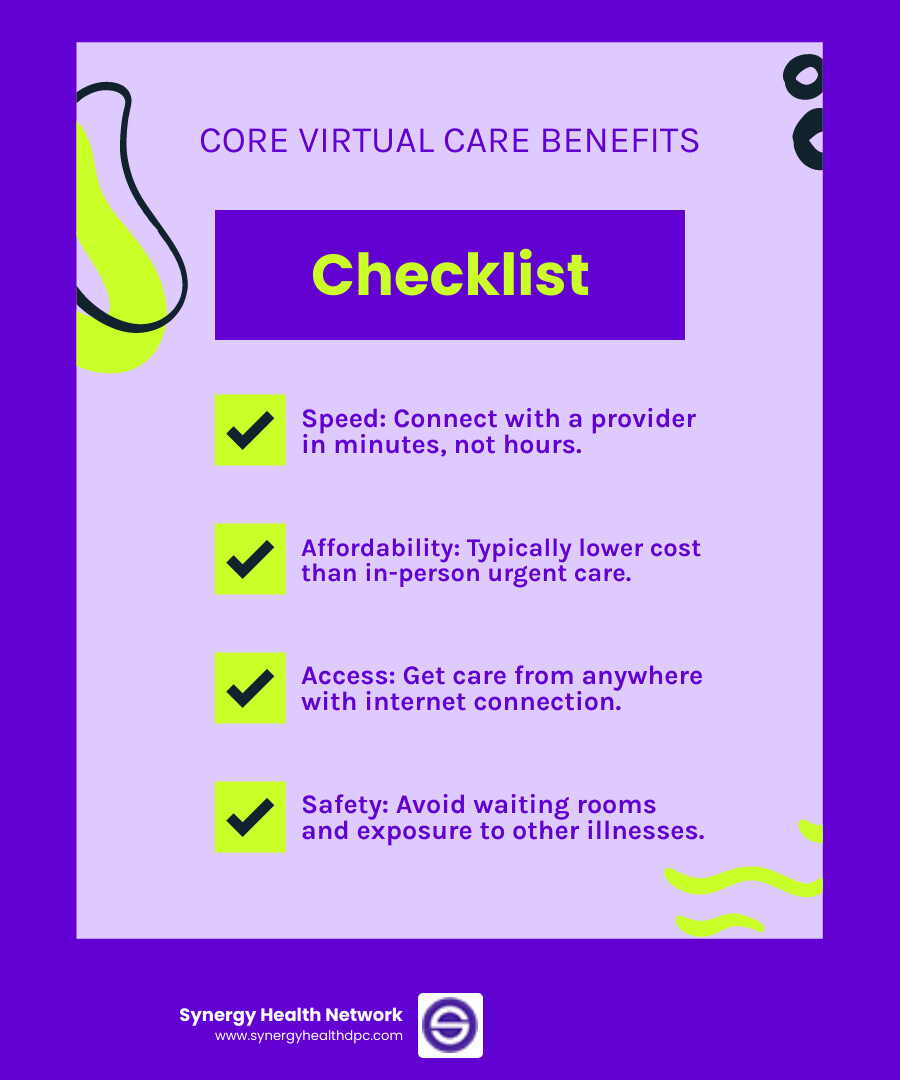
Virtual urgent care bridges the gap between “I need help now” and “I don’t need an emergency room.” It’s faster than waiting for a primary care physician and more affordable than a brick-and-mortar urgent care center. You can access board-certified doctors, nurse practitioners, or physician assistants from anywhere with internet access.
The service treats most common conditions—like rashes, coughs, fever, COVID-19 symptoms, sinus infections, and UTIs. You’ll typically connect with a provider within minutes, not hours. Unlike emergency rooms, which are for true emergencies, remote urgent care is perfect for moments that need medical advice today but don’t require in-person procedures.
The technology is simple: you just need a device with a camera and a stable internet connection. The process is straightforward: answer questions about your symptoms, upload photos if relevant, and connect via secure video. Your provider will then diagnose, recommend treatment, and send prescriptions to your pharmacy when appropriate.
What Can (and Can’t) Be Treated Virtually?
Understanding what remote urgent care can and cannot treat is crucial for making the right healthcare choice. Virtual care is great for handling many non-emergency conditions efficiently, saving you time and stress. However, know when an in-person visit or emergency services are necessary.
Remote urgent care excels at addressing common illnesses and minor injuries that don’t require immediate hands-on intervention. You can get professional medical advice, diagnoses, and treatment plans for many everyday health concerns from the comfort of home.
On the other hand, some conditions demand the physical presence of a healthcare professional. These include severe symptoms or issues that need a direct physical exam or complex procedures. Knowing the difference ensures you get the most appropriate care.

| Conditions Suitable for Remote Urgent Care | Conditions Requiring In-Person Care or Emergency Services |
|---|---|
| Allergies, Cold & Flu, Sore Throat | Chest Pain, Difficulty Breathing |
| Sinus Infections, UTIs, Pink Eye | Severe Bleeding, Deep Wounds |
| Rashes, Minor Burns, Insect Bites | Loss of Consciousness, Head Injuries |
| Nausea and Vomiting, Diarrhea | Suspected Broken Bones, Severe Sprains |
| Minor Headaches, Migraine Management | High Fever in Infants (under 3 months) |
| Medication Refills (non-controlled, short-term supply) | Abdominal Pain (severe), Appendicitis |
| COVID-19 Symptoms, Flu Symptoms | Psychiatric Emergencies (e.g., suicidal ideation) |
| Minor Asthma Exacerbations | Overdoses, Poisoning |
| Vision Loss, Sudden Weakness/Numbness |
Conditions Suitable for Virtual Visits
For many common ailments, remote urgent care is often the most convenient and effective solution. Our providers are equipped to diagnose and treat a wide range of conditions that don’t require a physical exam or immediate lab tests. For instance, if you wake up with a runny nose and a cough, suspecting a common cold or flu, we can connect you with a board-certified provider who can assess your symptoms, offer advice, and even prescribe medication if needed.
Here’s a list of common non-emergency conditions we frequently treat via virtual visits:
- Allergies: Seasonal allergies, allergic reactions (mild).
- Cold & Flu: Coughs, congestion, sore throat, fever (under 72 hours), body aches.
- Sore Throat: Strep throat evaluation (though a rapid test might require an in-person follow-up, initial assessment can be virtual).
- Sinus Infections: Diagnosis and prescription for sinusitis.
- UTIs (Urinary Tract Infections): Diagnosis and treatment for uncomplicated UTIs.
- Rashes: Minor skin irritations, eczema flare-ups, insect bites, poison ivy. Uploading photos can be incredibly helpful here!
- Pink Eye (Conjunctivitis): Evaluation and prescription for eye infections.
- Minor Burns: First-degree burns, small second-degree burns.
- Nausea and Vomiting: Assessment and treatment for acute gastrointestinal upset.
- Minor Headaches: Evaluation of headache symptoms and medication recommendations.
- COVID-19 Symptoms: Screening, advice, and management for suspected or confirmed cases.
- Medication Refills: For non-controlled, chronic medications, we can often provide a single 30-day supply refill.
For us, the goal is to make healthcare accessible and prompt, ensuring you get the right care at the right time. Services like ours can provide diagnosis, treatment, and prescriptions for these kinds of common illnesses and minor injuries, giving you peace of mind without the trip.
When to Seek In-Person Care or Emergency Services
While remote urgent care is convenient for minor issues, it isn’t a substitute for emergency care or conditions needing a hands-on approach. It’s important to know when to seek a higher level of care.
Virtual care has limitations. If you believe you are having a medical emergency, go to the nearest Emergency Room or call 911 immediately. A virtual visit cannot replace the life-saving capabilities of an emergency department.
Here are critical situations where remote urgent care should NOT be used, and what you should do instead:
- Chest Pain or Difficulty Breathing: These are classic signs of a heart attack or severe respiratory distress. Call 911 immediately.
- Severe Bleeding or Deep Wounds: Anything requiring stitches, staples, or that won’t stop bleeding needs immediate in-person attention to prevent infection and significant blood loss.
- Loss of Consciousness or Head Injuries: Any head trauma followed by dizziness, confusion, or loss of consciousness requires urgent evaluation for potential concussion or brain injury.
- Suspected Broken Bones or Severe Sprains: While we can assess minor injuries, a suspected fracture requires X-rays and physical examination to confirm and treat.
- High Fever in Infants: For infants under three months with a fever, this can be a sign of a serious infection and warrants immediate medical attention.
- Severe Abdominal Pain: Intense, localized abdominal pain could indicate appendicitis or other serious conditions that require urgent diagnosis and potentially surgery.
- Vision Loss or Sudden Weakness/Numbness: These could be symptoms of a stroke or other neurological emergencies.
- Psychiatric Emergencies: If you or someone you know is experiencing suicidal thoughts, severe panic attacks, or other acute mental health crises, seek immediate in-person help or call an emergency hotline.
- Controlled Substances: We cannot prescribe controlled substances like ADHD medication, benzodiazepines (e.g., Xanax), opioid pain medication (e.g., Vicodin), or testosterone through remote urgent care. These medications require in-person evaluation.
- Disability Paperwork or Doctor’s Notes Requiring Physical Exam: Requests for extensive disability paperwork or doctor’s notes often necessitate a physical examination and are typically outside the scope of remote urgent care.
- Weight Loss Medication: Certain weight loss medications may also require in-person consultation and monitoring.
For these situations, going to an emergency room or an in-person urgent care clinic is essential. We encourage you to know the difference and prioritize your safety. For those needs that do require an in-person visit, we offer urgent care services that can be accessed when appropriate.
Your Step-by-Step Guide to a Virtual Visit
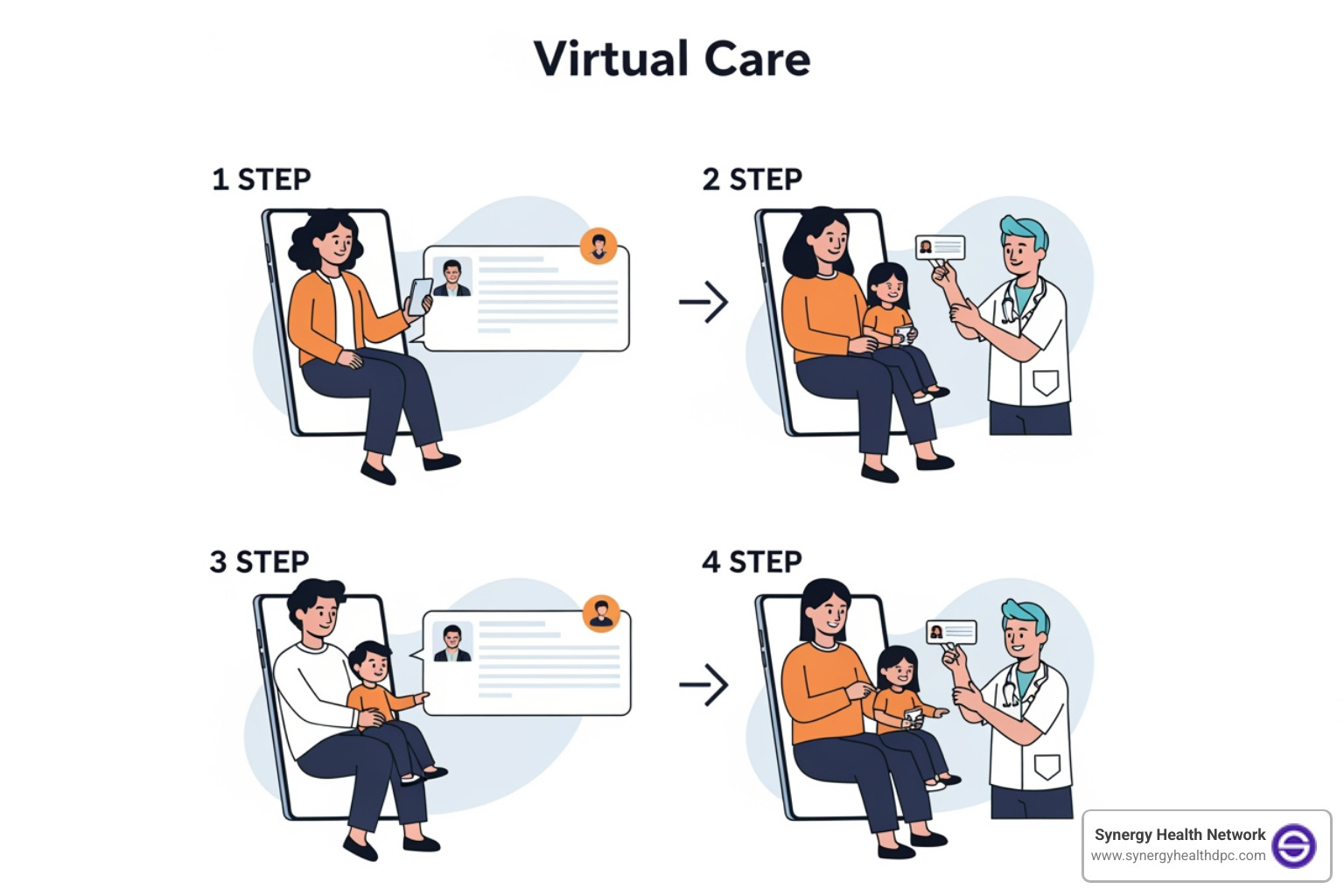
A great advantage of remote urgent care is its simple, stress-free process. The journey is streamlined from booking to treatment. Let’s walk through the typical steps of a virtual visit.
Scheduling and Preparing for Your Appointment
Getting started with remote urgent care is usually just a few clicks away. The first step involves accessing the service, often through a dedicated website or mobile app. Many platforms, including ours, allow you to register for virtual care services in just a few minutes.
Here’s how we typically guide you through scheduling and preparing:
- Choosing a Provider (or the Next Available): Some services might allow you to select a specific provider based on their profile and availability. Others, like our “next available physician” option, connect you with a board-certified provider within minutes for urgent needs.
- Booking a Time Slot: You’ll typically select a convenient date and time for your virtual visit. For urgent needs, you might be able to connect almost instantly, often within minutes.
- Filling Out Medical History and Online Health Interview: Before your consultation, we’ll ask you to complete an online health interview. This process usually takes about 5-15 minutes. We’ll ask you to provide answers to questions about how you are feeling, your current symptoms, any medications you’re taking, and your relevant medical history. This helps the provider understand your situation before the video call begins.
- Uploading Photos (if relevant): For conditions like rashes, minor injuries, or eye issues, you might have the option to upload photos directly to your secure patient portal. This can significantly help the provider in assessing your condition remotely.
- Ensuring a Quiet, Private Space and Stable Connection: For the best experience, we recommend finding a quiet, private area where you can speak freely with your provider. Also, ensure you have a stable internet connection and a fully charged device (smartphone, tablet, or computer with a camera). This helps prevent interruptions and ensures a clear video or audio connection.
Completing this preparatory work ensures that your actual consultation is efficient and focused. As part of our commitment to accessible care, we make it easy for you to get all your paperwork done beforehand, so your appointment can be as smooth as possible.
What to Expect During Your Remote Urgent Care Visit
After scheduling and completing the initial paperwork, you’ll have your virtual consultation. This is where you’ll interact with a healthcare professional from the comfort of your home.
Here’s what you can expect during your visit:
- Connecting via Secure Video: At your scheduled time, you’ll connect with your provider through a secure video link, accessible via your smartphone, tablet, or computer. This secure platform ensures your privacy and the confidentiality of your medical information.
- Typical Wait Times: One of the most praised aspects of remote urgent care is the significantly reduced wait time. Unlike traditional urgent care centers where you might spend hours in a waiting room, virtual visits often boast wait times in minutes, not hours. Many services pride themselves on connecting you with a board-certified provider within minutes of your request.
- Speaking with a Board-Certified Provider: You’ll be connected with a qualified healthcare professional, such as a board-certified physician, nurse practitioner, or physician assistant. These providers are experienced and trained to perform visits online, ensuring you receive expert care.
- Visual Examination (if applicable): While not a physical exam, the provider will use the video connection to visually assess your condition. For example, they might ask you to show them a rash, look at your throat, or observe your general demeanor. This is where those uploaded photos become invaluable.
- Answering Questions About Your Condition: The provider will ask detailed questions about your symptoms, how long you’ve had them, what makes them better or worse, and any other relevant health information. This interactive dialogue is crucial for an accurate diagnosis.
Our aim is to replicate the quality and thoroughness of an in-person visit as much as possible within the virtual environment. As you can see, a typical video visit is designed for efficiency and personalized attention, focusing on your immediate health needs. For a visual demonstration, you can see what happens during a typical video visit.
Receiving Your Treatment Plan and Prescriptions
After your consultation, you’ll receive a personalized treatment plan and, if needed, prescriptions. This final step provides actionable guidance for your recovery.
Here’s how we ensure you get the care you need post-consultation:
- Personalized Treatment Plan: Your provider will develop a custom treatment plan based on their assessment. This plan might include recommendations for over-the-counter medications, home care instructions, lifestyle adjustments, or a prescription. They will explain your condition, answer your questions, and ensure you understand the next steps for your recovery.
- Prescription Process: If your provider determines that medication is necessary, they can send a prescription directly to your preferred pharmacy. This means you can often pick up your medication shortly after your virtual visit, saving you another trip. We can provide new prescriptions or refills for non-controlled substances, often for a single 30-day supply.
- Limitations on Certain Prescriptions: Certain medications, particularly controlled substances (like ADHD medication, benzodiazepines, or opioid pain medication), cannot be prescribed through remote urgent care. This is a regulatory and safety measure. Similarly, some weight loss medications may require in-person evaluation.
- Follow-up Instructions: Depending on your condition, the provider might recommend a follow-up visit, either virtual or in-person, or suggest you contact your primary care physician. Many services, including ours, offer message-based access to a provider for a period (e.g., 72 hours) after your visit, allowing you to ask follow-up questions.
The integration of digital diagnostic services further improves this process. As we dig into the future is remote: a deep dive into diagnostic services, we see how technology continues to evolve, making virtual care even more comprehensive. Our aim is to provide you with a complete and convenient care experience, from diagnosis to treatment, all from your home.
Navigating Costs, Coverage, and Technology for Remote Urgent Care
Understanding the financial and technical aspects of remote urgent care is essential for making it a seamless part of your healthcare routine. We know that costs can be a major concern, and clarity around insurance coverage and self-pay options is something we prioritize. Furthermore, knowing what technology you need ensures you’re always ready to connect with a provider.
Understanding the Costs of Remote Urgent Care
One of the compelling reasons many people choose remote urgent care is its often more predictable and lower cost compared to traditional in-person visits. The pricing structure can vary, and we want to help you understand your options.
- Pay-per-visit Models: Many services operate on a pay-per-visit basis with a flat fee, which can be a cost-effective option for infrequent needs.
- Insurance Coverage: A significant benefit is that many remote urgent care services are covered by insurance plans. Depending on your plan, a visit could have a low copay or even be fully covered. It’s always a good idea to check with your insurance provider to understand your out-of-pocket costs.
- Self-Pay Options: For those without insurance or for services not covered by a plan, self-pay options are readily available and transparently priced.
- Direct Primary Care (DPC) Memberships: Our model at Synergy Health DPC offers an innovative approach. We provide unlimited virtual visits, 24/7 provider access, and personalized treatment with no copays, all for a single monthly fee. This offers significant savings and predictability for those who frequently use healthcare services. Some of our programs qualify for virtual visits for as low as $39. For more details on our cost-effective approach, explore our DPC Telehealth Membership.
Geographic Availability and Provider Access
The widespread availability of remote urgent care is a game-changer for healthcare access across the USA. We strive to bring quality medical care directly to you, regardless of your location, within the United States.
- Nationwide Services: Many remote urgent care platforms offer services across all 50 states. This means that whether you’re at home, at work, or traveling within the U.S., you can often access a healthcare provider.
- State-Specific Regulations: While many services are nationwide, healthcare regulations can vary by state. This might affect the specific services offered, the types of providers available, or how prescriptions are handled. We ensure our services comply with all applicable state laws.
- 24/7 Availability: A hallmark of remote urgent care is its round-the-clock accessibility. Many services are available 24 hours a day, every day of the year. This means you can get care for urgent needs whenever they arise, not just during standard business hours.
- Access to Board-Certified Providers: You can expect to connect with experienced and board-certified healthcare professionals. These providers are trained to perform visits online, ensuring the quality of care is on par with what you would find in an in-person clinic.
Our mission is to provide accessible and prompt healthcare at your fingertips, breaking down geographical barriers and making quality care a reality for more people.
Ensuring Quality, Safety, and Continuity of Care
Questions about quality, safety, and continuity of care are common with remote urgent care. We prioritize these aspects to provide care that is convenient, high-quality, secure, and integrated with your broader health needs.
- Provider Qualifications: The quality of your care starts with the expertise of your healthcare provider. In remote urgent care settings, you’ll typically interact with highly qualified professionals, including board-certified physicians, nurse practitioners (NPs), and physician assistants (PAs). These providers are not just medical experts; they are also trained in the nuances of virtual consultations, ensuring they can effectively diagnose and treat conditions remotely. For example, some services highlight doctors with decades of experience, all trained to perform visits online.
- HIPAA Compliance and Data Security: Patient privacy and data security are non-negotiable. All reputable remote urgent care platforms are required to be HIPAA (Health Insurance Portability and Accountability Act) compliant. This means they employ robust encryption methods and secure technologies to protect your personal health information. From the moment you log in to your video consultation and through to any electronic prescriptions, your data is safeguarded against unauthorized access. We use secure platforms for all aspects of your virtual visit, from communication to prescriptions, ensuring your health records are kept private.
- Secure Platforms: The technology used for virtual visits is specifically designed for healthcare. These secure platforms ensure that your video consultations are confidential, and any information you share or photos you upload are transmitted and stored securely.
- Integrating Visit Notes with Your Primary Care Physician (PCP): We believe in integrated care. While remote urgent care is excellent for immediate, non-emergency needs, it doesn’t replace your primary care provider. Ideally, after a virtual visit, a summary of your consultation can be shared with your PCP (with your consent). This ensures continuity of care, allowing your PCP to stay informed about your health events and incorporate the virtual visit into your long-term health record. This collaborative approach helps create a comprehensive view of your health, avoiding fragmented care.
By focusing on qualified providers, strong security, and care integration, we ensure our remote urgent care services deliver the benefits of virtual healthcare without compromising quality or safety.
Frequently Asked Questions
We know you might have more questions about remote urgent care. Here, we address some of the most common inquiries to provide even greater clarity and help you feel confident in choosing virtual care.
How quickly can I see a provider?
A major advantage of remote urgent care is speed. Instead of waiting for hours at a traditional clinic, you can typically connect with a provider within minutes of your request. This on-demand access allows you to get medical advice exactly when you need it.
Is my personal health information secure?
Yes. Your privacy is paramount. Reputable remote urgent care platforms are HIPAA-compliant, adhering to strict federal regulations to protect your health data. We use secure, encrypted communication for all consultations, records, and prescriptions to ensure your information remains confidential.
Can I get a doctor’s note for work or school?
This depends on the provider and the service’s policy. Many providers can issue a doctor’s note for minor illnesses diagnosed virtually. However, remote urgent care is often not suitable for requests requiring a physical exam, like extensive disability paperwork. It’s best to clarify this with the provider before your visit if a note is your primary reason for the consultation.
Conclusion: Embracing the Future of Convenient Healthcare
Remote urgent care is a transformative force in healthcare, offering a convenient, accessible, and affordable alternative to traditional care. It bridges the gap between an immediate need and a complex medical system, empowering you to manage your health from home.
The benefits are clear: rapid access to providers, minimal wait times, transparent costs, and receiving care without leaving home. It’s a significant step forward in patient empowerment, putting quality healthcare at your fingertips.
At Synergy Health DPC, we are proud to be at the forefront of this shift towards accessible healthcare. Our innovative Direct Primary Care (DPC) model offers unlimited virtual visits, 24/7 provider access, and personalized treatment with no copays, all for a single monthly fee. We believe in building lasting relationships with our patients, ensuring continuity of care that integrates seamlessly with your overall health journey.
We invite you to experience the future of healthcare with us. To learn more about how our services can benefit you, please contact us. Take the next step toward convenient, high-quality healthcare by exploring our comprehensive Urgent Care services today.