Why Free Telehealth Matters for Healthcare Access
Free telehealth is changing how many people access medical care, offering convenient virtual appointments with doctors and nurses without the typical costs or long wait times. In Canada, for example, this model is becoming increasingly prevalent, providing a useful case study in publicly funded virtual care.
Healthcare costs are climbing. Wait times are frustrating. And for many, simply getting to a doctor’s office feels like a full-day commitment.
The good news? Telehealth is changing the game.
Free telehealth services let you connect with licensed doctors, nurse practitioners, and registered nurses from your home, office, or anywhere with an internet connection. No travel. No waiting rooms. No surprise bills if you have the right public or private coverage.
In some regions, like the Canadian provinces of Ontario, British Columbia, and Alberta, residents with valid health cards can access several completely free virtual healthcare platforms. These services cover everything from urgent care consultations and prescription renewals to mental health support and specialist referrals.
In the United States, many people access low- or no-cost telehealth through employer-sponsored plans, Medicaid, Medicare, community health centers, or membership-based models like Direct Primary Care (DPC). Synergy Health DPC, for example, offers unlimited virtual visits and 24/7 access to providers for a predictable monthly fee instead of per-visit copays.
But finding and understanding these services isn’t always straightforward. Some platforms are restricted to specific health regions, some insurance plans only cover certain types of visits, while others require registration or have limited hours. For those outside specific public programs or DPC memberships, there may be out-of-pocket costs.
This guide explores how government-funded telehealth services work in Canada, and how membership models like DPC in the USA are expanding access to virtual care. We will examine what services are covered, who is eligible, and what to expect from a virtual visit. By looking at these models, we can see how different systems are working to provide quality medical care without the typical barriers.
What is Telehealth and What Does It Offer?
At its core, telehealth is the delivery of health-related services and information via electronic information and telecommunication technologies. Think of it as healthcare that comes to you, wherever you are, through your phone, tablet, or computer. It’s a broad term that encompasses a wide range of services, going beyond just virtual doctor visits.
While often used interchangeably, there’s a subtle difference between “telehealth” and “telemedicine.” Telemedicine typically refers specifically to remote clinical services, such as virtual doctor’s appointments, diagnoses, and treatments. Telehealth, on the other hand, covers a broader spectrum, including remote patient monitoring, health education, administrative meetings, and even continuing medical education for healthcare professionals. So, while all telemedicine is telehealth, not all telehealth is telemedicine.
Telehealth can be delivered in various ways. Synchronous communication involves real-time interaction, like a live video call with a doctor or a phone consultation. This is what most people think of when they hear “telehealth appointment.” Asynchronous communication involves transmitting health information, such as messages, images, or recorded videos, for a healthcare provider to review later. For example, sending a photo of a skin rash to a doctor who then responds with a diagnosis or treatment plan. Both methods offer distinct advantages, depending on your needs. For more information about virtual healthcare services, explore our insights on our white-label telehealth solutions.
Common Telehealth Services
The range of services available through telehealth is constantly expanding, making it a versatile tool for managing your health. Here are some of the most common offerings:
- Virtual Primary Care: Connect with a general practitioner for routine check-ups, follow-ups, and discussions about general health concerns. This can often replace a traditional in-person visit for many non-emergency issues.
- Urgent Care Consultations: For medical issues that aren’t life-threatening but require prompt attention (e.g., colds, flu, minor infections), telehealth offers a quick way to get assessed and receive advice or prescriptions.
- Prescription Renewals: Many platforms allow you to consult with a doctor to renew existing prescriptions, saving you a trip to the clinic. Some even offer free prescription delivery services in Canada.
- Specialist Referrals: If a general practitioner determines you need to see a specialist, they can often issue a referral during your virtual appointment.
- Lab Test Requisitions: Need a blood test or other lab work? Providers can issue requisitions virtually, which you can then take to a local lab.
- Chronic Disease Management: For conditions like diabetes, hypertension, or asthma, telehealth can facilitate regular check-ins, medication adjustments, and lifestyle advice.
- Mental Health Support: This rapidly growing area includes virtual therapy, counselling, and psychiatric consultations, offering accessible mental healthcare.
The Role of Doctors and Nurses
In the field of telehealth, both doctors and nurses play crucial, distinct, and often collaborative roles. Their expertise ensures that you receive comprehensive and appropriate care, even from a distance.
- Physician Consultations: Licensed doctors, including general practitioners and specialists, are central to telehealth. They conduct virtual consultations, diagnose medical conditions, provide treatment plans, issue prescriptions, and make referrals to other specialists or for in-person follow-ups when necessary. Some platforms connect you directly with these physicians for video appointments.
- Nurse Practitioner Roles: Nurse practitioners (NPs) are advanced practice registered nurses who can also diagnose illnesses, prescribe medications, and order and interpret diagnostic tests. They often work independently or collaboratively with physicians in telehealth settings, providing a broad scope of primary and urgent care services, similar to what a doctor might offer.
- Registered Nurse Advice Lines: Provincial health advice lines are excellent examples of the vital role registered nurses play. These services often offer free, confidential health advice 24 hours a day, seven days a week. When you call, a registered nurse will assess your symptoms, provide guidance on self-care, and help you determine the most appropriate next step – whether it’s visiting a doctor, a clinic, or in emergencies, calling 911. They are a fantastic first point of contact for non-emergency health concerns.
- Triage: Nurses and nurse practitioners often perform initial triage in telehealth systems, assessing the urgency and nature of your concern to direct you to the right level of care. This ensures efficiency and that you’re seen by the most appropriate provider.
- Treatment Plans: Both doctors and nurses contribute to developing and monitoring your treatment plans, whether it involves medication, lifestyle changes, or further investigations.
- Continuity of Care: While some telehealth services are designed for episodic care (like a walk-in clinic), many aim to support continuity. Platforms that allow you to choose a preferred provider or access your medical documents after a visit help foster an ongoing relationship with your healthcare team. The shift towards virtual care is truly changing how we experience healthcare, offering numerous advantages. Find more about The Benefits of Virtual Healthcare.
The Pros and Cons of Virtual Healthcare
Telehealth has rapidly evolved, especially in recent years, offering a new dimension to healthcare access. Like any innovation, it comes with a unique set of advantages and challenges. Understanding both sides can help you make informed decisions about when and how to use virtual care.

Key Benefits of Using Telehealth
The rise of telehealth is largely due to its undeniable convenience and accessibility. Here are some of the standout benefits:
- Convenience: Perhaps the most obvious benefit, telehealth allows you to access medical advice and care from the comfort of your own home, office, or any location with internet access. No more battling traffic, finding parking, or sitting in crowded waiting rooms.
- Reduced Travel Time and Costs: Eliminating the need to travel saves time, gas money, and potentially public transport fares. This is particularly beneficial for individuals in rural or remote areas where healthcare facilities might be sparse.
- Access for Remote Areas: Telehealth bridges geographical gaps, providing vital healthcare services to communities that might otherwise lack immediate access to doctors or specialists.
- Cost Savings: For provincially-insured Canadians, free telehealth means no out-of-pocket costs for consultations. Even for those paying per visit, virtual appointments can sometimes be more affordable than in-person visits, especially when considering indirect costs like lost wages from taking time off work.
- Minimized Exposure to Illness: When infectious diseases are a constant concern, virtual appointments reduce your exposure to germs in clinics and hospitals, protecting both yourself and other patients.
- Flexible Scheduling: Many telehealth platforms offer extended hours or on-demand appointments, making it easier to fit healthcare into a busy schedule without disrupting work or family commitments. As we’ve seen, the advantages are significant. Explore The Key Benefits of Telehealth Services for a deeper dive into how virtual care can improve your well-being. For a broader perspective on the advantages, visit our page on Benefits of Telehealth.
Potential Limitations and Drawbacks
While the benefits are compelling, it’s important to acknowledge that telehealth isn’t a perfect solution for every situation:
- Technology Requirements: To participate in a video consultation, you need a reliable internet connection, a smartphone, tablet, or computer with a camera and microphone. Not everyone has access to these resources, creating a potential digital divide.
- Internet Connection Issues: A spotty internet connection can disrupt calls, leading to frustration and ineffective consultations. There’s nothing quite like trying to explain your symptoms when your video keeps freezing!
- Diagnostic Limitations: Many medical conditions require a physical examination for accurate diagnosis. A doctor can’t feel a swollen lymph node or listen to your heart through a screen. This means some conditions will always necessitate an in-person visit.
- Inability to Perform Physical Exams: This is perhaps the biggest limitation. Without the ability to touch, listen, or physically inspect, doctors rely heavily on your verbal descriptions and visual cues, which can sometimes be insufficient.
- Privacy Concerns: While reputable platforms use secure, encrypted connections, some individuals may still feel uncomfortable discussing sensitive health information virtually, especially if others are nearby in their home environment. It’s crucial to ensure you’re using platforms that prioritize your data security.
- Not for Emergencies: This is a critical point we cannot stress enough: telehealth is NOT for medical emergencies. If you are experiencing severe distress, chest pain, difficulty breathing, sudden severe bleeding, or any life-threatening symptoms, you must call 911 or go to the nearest emergency department immediately. Telehealth services are designed for non-urgent or semi-urgent care.
How to Access Free Telehealth in Canada
Canada’s healthcare system is primarily publicly funded, and this extends to many telehealth services, particularly in provinces like Ontario, British Columbia, and Alberta. Understanding how to steer these provincial offerings is key to accessing free telehealth if you are eligible under those plans.
While Synergy Health DPC operates in the USA rather than Canada, the Canadian experience offers helpful insight into how publicly funded virtual care can work alongside membership-based models. In both cases, the goal is similar: accessible, convenient care without unpredictable per-visit charges.
The concept of free telehealth in Canada largely hinges on your provincial health coverage. If you have a valid health card from a participating province, many virtual consultations are covered, just like an in-person visit to a doctor. This commitment to accessible healthcare is reflected in the growing number of publicly funded programs. For those seeking prompt and convenient healthcare solutions, virtual options can truly feel like Accessible and Prompt Healthcare at Your Fingertips.
Finding Provincially-Funded free telehealth Services
Several platforms and services offer free telehealth appointments for residents with valid provincial health cards in specific regions:
- Provincial Health Plans: The provincial health plans in British Columbia (MSP), Alberta (AHCIP), and Ontario (OHIP) are the primary drivers of free telehealth services in these regions. They cover the cost of virtual consultations with licensed healthcare providers.
- Video Consultation Platforms: Several provincially funded online platforms connect patients to local doctors by video. These are often free for Canadian residents with a valid provincial health card from a participating province. They provide encrypted video calls, prescriptions sent to your pharmacy, and aim for continuity of care, allowing you to skip the waiting room.
- Telephone Health Advisory Services: Many provinces offer a free, confidential service accessible to residents 24 hours a day, seven days a week. By calling a designated number, you can receive health advice from a registered nurse, find health services, or get health information. The service is typically provided in both English and French, with translation support for some other languages. You may be asked to provide your health card number, but it is not always required.
Eligibility for free telehealth in Canada
To access free telehealth services in Canada, specific criteria usually apply, primarily revolving around your provincial health coverage:
- Valid Provincial Health Card: This is the most crucial requirement. If you possess a valid health card from Ontario (OHIP), British Columbia (MSP), or Alberta (AHCIP), you are generally eligible for covered virtual services on platforms operating within those provinces.
- Residency Requirements: You must be a resident of the province where the service is being offered and funded.
- Geographic Restrictions: Some platforms might have specific service areas even within a covered province. It’s always wise to check a platform’s specific coverage details.
- Services Covered: The types of services covered for free typically include general consultations, prescription renewals, referrals, and basic health advice.
- Services Not Covered: While many services are free, some specialized treatments or specific types of consultations might not be covered, even with a health card. For instance, while some platforms offer online therapy, it might be covered by extended health benefits rather than provincial plans. Always confirm if a specific service you need is covered.
Costs for Those Without Provincial Coverage
What if you don’t have a valid provincial health card from Ontario, BC, or Alberta, or if you’re a resident of another province? The concept of free telehealth becomes a bit more nuanced:
- Out-of-Province Patients: If you’re a Canadian resident from a province other than Ontario, BC, or Alberta, you will typically incur a fee for services on many virtual care platforms.
- International Students and Visitors to Canada: Individuals visiting Canada or international students who do not have provincial health coverage will also generally need to pay for virtual consultations. These fees are usually per-visit.
- Per-Visit Fees: For those without provincial coverage, services are often charged on a per-visit basis. These fees can range, but are typically in the $55-$90 range for a standard consultation.
- Subscription Models: While not typically “free,” some telehealth providers offer subscription models where you pay a recurring fee for unlimited or discounted virtual visits. This can be an option for those without provincial coverage seeking more predictable healthcare costs.
In the USA, membership-based Direct Primary Care practices like Synergy Health DPC use a similar predictable-cost approach, offering unlimited virtual visits and 24/7 access in exchange for a flat monthly fee instead of visit-by-visit charges.
What to Expect From Your Virtual Appointment
Stepping into virtual healthcare might feel a little different from your usual clinic visit, but the goal remains the same: quality care. Understanding the process can help ease any initial apprehension. We’re moving towards a future where digital interactions are increasingly integral to our well-being. For a comprehensive look at this shift, consider The Future of Healthcare: A Deep Dive into Online Medical Care.
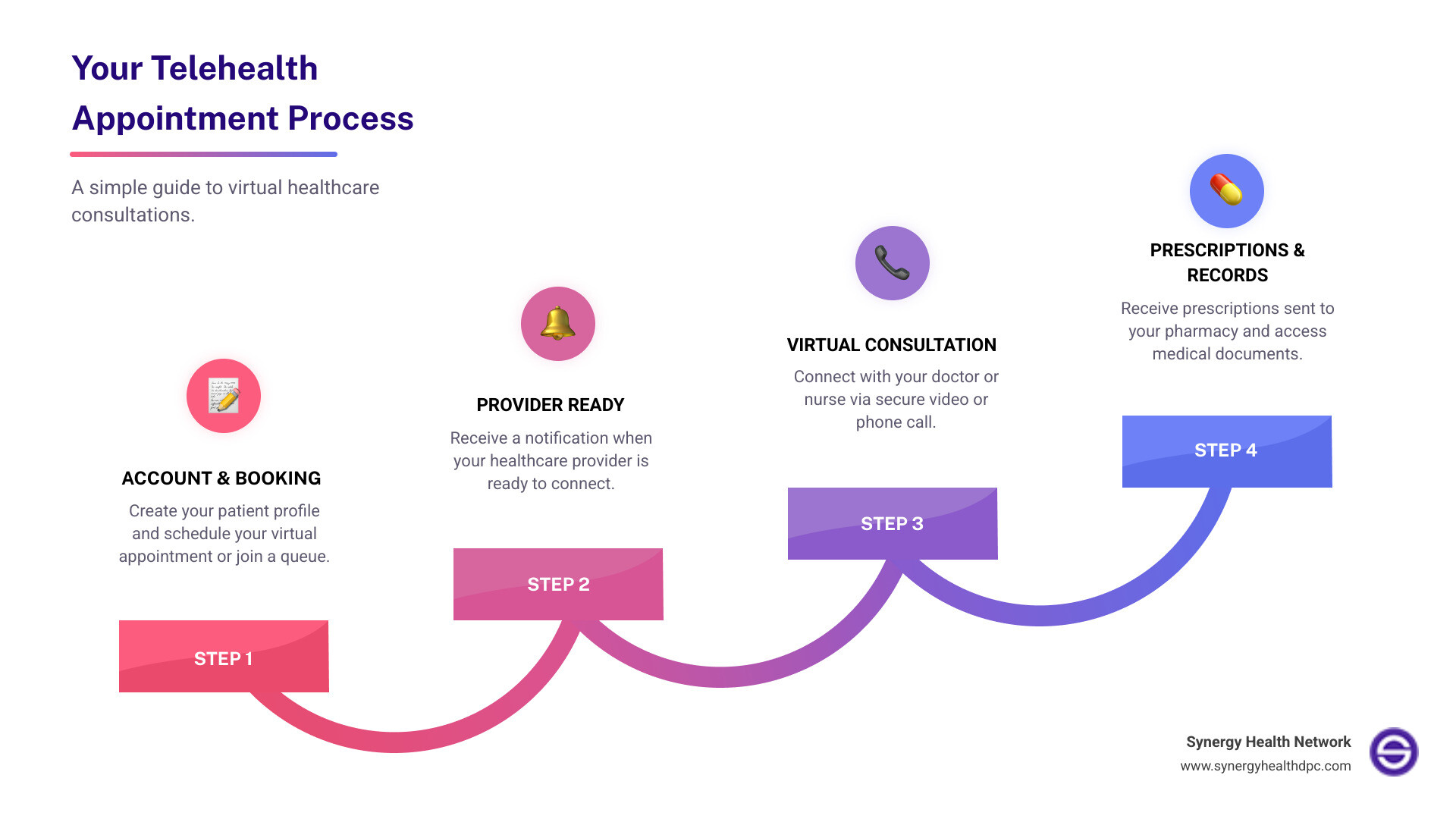
A virtual appointment, whether by video or phone, aims to replicate the in-person experience as much as possible, focusing on conversation and visual assessment (if on video). You’ll typically register an account, provide your medical history, and then either book a specific time or join a virtual queue. When it’s your turn, you’ll connect with a licensed provider who will ask about your symptoms, medical history, and any concerns. They’ll diagnose, offer advice, prescribe medication, or recommend further steps, just as they would in person. This shift to virtual care is particularly impactful for mental health support, as discussed in Getting Mental Health Support Virtually.
Medical Conditions Treated via Telehealth
Telehealth is suitable for a surprisingly wide array of medical conditions, especially those that don’t require a physical examination or can be assessed through visual cues and detailed discussion. Here’s a list of common conditions that are frequently and effectively treated via free telehealth:
- Colds and Flu: Assessment of symptoms, advice on managing discomfort, and prescriptions for symptom relief.
- Urinary Tract Infections (UTIs): Diagnosis based on symptoms and medical history, with prescriptions for antibiotics.
- Skin Issues and Rashes: Visual assessment of skin conditions, diagnosis, and prescription of topical or oral medications.
- Allergies: Discussion of symptoms, identification of potential triggers, and prescription of antihistamines or other allergy medications.
- Minor Infections: Assessment of ear infections, conjunctivitis (pink eye), or other minor localized infections, leading to appropriate treatment.
- Prescription Refills: Convenient renewal of existing prescriptions for chronic conditions.
- Weight Loss Consultations: Initial discussions about weight management strategies, including lifestyle advice and potential medication options like GLP-1 plans (though these might involve additional costs).
- Birth Control or Plan B: Consultations for birth control options, prescription renewals, or emergency contraception.
- Sick Notes: Obtaining medical notes for work or school if an illness requires absence.
- Referrals to Specialists: If a virtual provider determines you need specialized care, they can issue a referral.
- Mental Health Concerns: Initial assessments, ongoing therapy sessions, and medication management for conditions like anxiety and depression.
Addressing Mental Health Concerns
Mental health support has become one of the most significant and impactful applications of telehealth. The accessibility and discretion offered by virtual platforms can be life-changing for many individuals seeking help.
- Virtual Therapy and Counselling: Telehealth allows you to connect with licensed therapists, counsellors, and psychotherapists for individual, group, or family therapy sessions via video, phone, or secure messaging. This removes geographical barriers and often makes it easier to fit sessions into busy schedules.
- Psychiatry: Psychiatrists can conduct virtual consultations for diagnosis, medication management, and ongoing support for various mental health conditions, including anxiety, depression, bipolar disorder, and PTSD.
- Anxiety and Depression Support: Many platforms specialize in treating common conditions like anxiety and depression, offering assessments, personalized treatment plans, and monitoring of progress. The convenience of accessing care from a familiar environment can be particularly beneficial for those struggling with social anxiety or mobility issues.
- Medication Management: For individuals already on psychiatric medication, telehealth can provide regular follow-ups, dosage adjustments, and prescription renewals, ensuring continuity of care. Some telehealth providers may have limitations on prescribing controlled substances, such as benzodiazepines or stimulants.
- Confidentiality in Mental Healthcare: Maintaining privacy is paramount in mental health. Reputable telehealth platforms use secure, encrypted channels to ensure your discussions remain confidential. However, we always recommend finding a private space at home where you feel comfortable speaking openly without being overheard. For a deeper understanding of telehealth in general, including its applications in mental health, refer to MedlinePlus: Telehealth.
Privacy and Security Measures
When it comes to your health information, privacy and security are non-negotiable. Reputable free telehealth providers understand this and implement robust measures to protect your data and ensure confidential consultations.
- Data Encryption: Just like online banking, secure telehealth platforms use bank-level encryption to protect your personal health information (PHI) during transmission and storage. This means your conversations and data are scrambled, making them unreadable to unauthorized parties.
- Secure Platforms: Providers are legally and ethically obligated to use secure, compliant platforms. In Canada, this generally means adhering to provincial privacy legislation like the Personal Health Information Protection Act (PHIPA) in Ontario, which governs how health information is collected, used, and disclosed.
- Patient Confidentiality: Healthcare professionals involved in telehealth are bound by the same confidentiality agreements as those in traditional in-person care. Your medical information is protected by law and professional ethics.
- Identity Verification: To ensure you’re speaking with the correct patient and that the provider is legitimate, platforms often employ identity verification processes during registration and before appointments. This might involve confirming your provincial health card details or other identifying information.
- Data Storage: Many Canadian telehealth providers explicitly state they use bank-level encryption and store data securely in Canada, further ensuring compliance with national privacy laws and reducing concerns about data being subject to foreign jurisdictions.
We take your privacy seriously and advise you to always look for clear statements on privacy policies and security measures when choosing a telehealth provider.
Conclusion
We’ve explored the expansive world of free telehealth in Canada, uncovering how it’s democratizing access to healthcare for countless individuals. From understanding the fundamental differences between telehealth and telemedicine to navigating the specific provincial offerings in Ontario, British Columbia, and Alberta, we hope this guide has illuminated the path to convenient and cost-effective medical care.
The value of accessible healthcare cannot be overstated. Telehealth, particularly the free options available through provincial health plans, breaks down barriers of geography, time, and even social anxiety, allowing more Canadians to connect with doctors and nurses when they need them most. Whether it’s a quick consultation for a cold, a prescription renewal, or ongoing mental health support, virtual care offers a flexible and efficient solution.
The future of virtual care in Canada looks bright, with continued innovation and integration into our healthcare system. As technology advances, we anticipate even more seamless and comprehensive virtual health services becoming available.
While this guide has focused on free telehealth in Canada, it’s worth noting that other models exist to provide accessible and predictable healthcare, particularly in the USA. For those seeking consistent, personalized care with predictable healthcare costs, a Direct Primary Care (DPC) model can be an excellent option. DPC offers services like unlimited virtual visits and 24/7 provider access for a single monthly fee, eliminating copays and ensuring a strong patient-provider relationship. If you’re interested in a model that prioritizes comprehensive, proactive care with clear costs, we invite you to Learn more about our DPC Telehealth Membership.